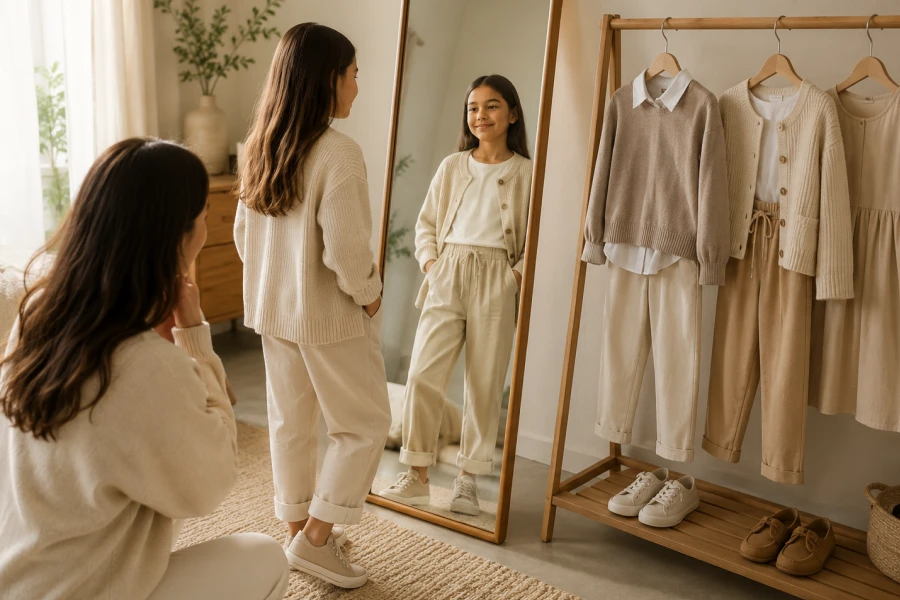
Kids capsule outfits help families remove the small decisions that drain busy mornings. A child may only need a few dependable outfit formulas. Parents may only need a clearer way to organize them. The idea works because children thrive with familiar choices. They still enjoy variety, color, and personality. They simply do better when every option feels wearable. Instead of building outfits from a crowded closet, you build from reliable combinations. This saves time before school, travel, activities, and family plans. It also reduces last-minute laundry panic. Dressing becomes a repeatable habit, not a daily puzzle.
Children feel proud when they can dress themselves. That independence grows when outfits are simple to understand. Pairing becomes easier when colors and shapes repeat. A child can choose between two tops and two bottoms without confusion. This creates ownership without overwhelming them. Parents still guide the overall structure. The child gets freedom inside smart boundaries. A clear stress-free school outfits setup helps everyone leave the house calmer. It also builds confidence through everyday responsibility. Small choices become practice for bigger ones.
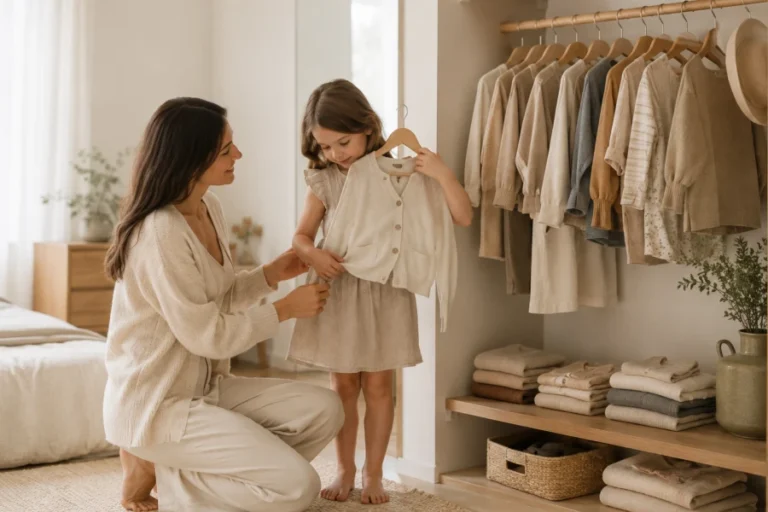
An outfit formula is simply a repeated combination. It might be tee, soft pants, and hoodie. It might be dress, leggings, and cardigan. It might be polo, shorts, and sneakers. These formulas give structure without making clothing boring. Repeatable combinations help children know what feels comfortable. They also make shopping more focused. You can see which categories need replacing. A useful toddler style system can begin with only three formulas. Older children can help name their favorites. Familiarity turns dressing into a smoother routine.
Waste often comes from buying cute pieces without a clear role. A sweater may be adorable but impossible to match. A dress may fit one occasion and then disappear. A bright pair of pants may demand too much coordination. Planned outfits prevent that problem. Every new piece should serve several combinations. This keeps spending more intentional. It also helps drawers stay lighter. A focused capsule clothing for children method supports better use of every item. The closet becomes smaller but more productive.
Children need clothing that keeps pace with their movement. School mornings may start cold and end warm. Playgrounds require stretch, grip, and washable fabrics. Family outings may need neater layers. Sports, art days, and travel can demand different textures. Plan outfit formulas around those activities first. Then add color and style. This keeps the closet useful beyond photo-ready moments. Seasonal bins can hold items that matter later. Daily drawers should hold what works now. The simpler the access, the easier the habit becomes.
Busy parents benefit from fewer moving pieces. A planned closet makes shopping lists shorter. It also makes laundry easier to sort. You know which items are essential because they appear in repeated formulas. This helps prevent overbuying during sales. It also protects mornings from surprise gaps. Keep a short list of missing basics on your phone. Review it before seasonal shopping. A practical morning outfit planning routine makes the system easier to maintain. Parents gain mental space, not just closet space.
Fun matters because children are not miniature adults. Let one piece carry personality in each outfit. That might be a graphic tee, bright sneaker, patterned dress, or favorite jacket. Keep the supporting pieces simple. This lets the playful item stand out without creating chaos. Rotate favorites so they remain special. Invite your child to create two outfit combinations each week. Their choices may surprise you. That participation builds cooperation. The closet stops feeling like a rule. It becomes a shared system that makes dressing easier for everyone.


Leave a comment