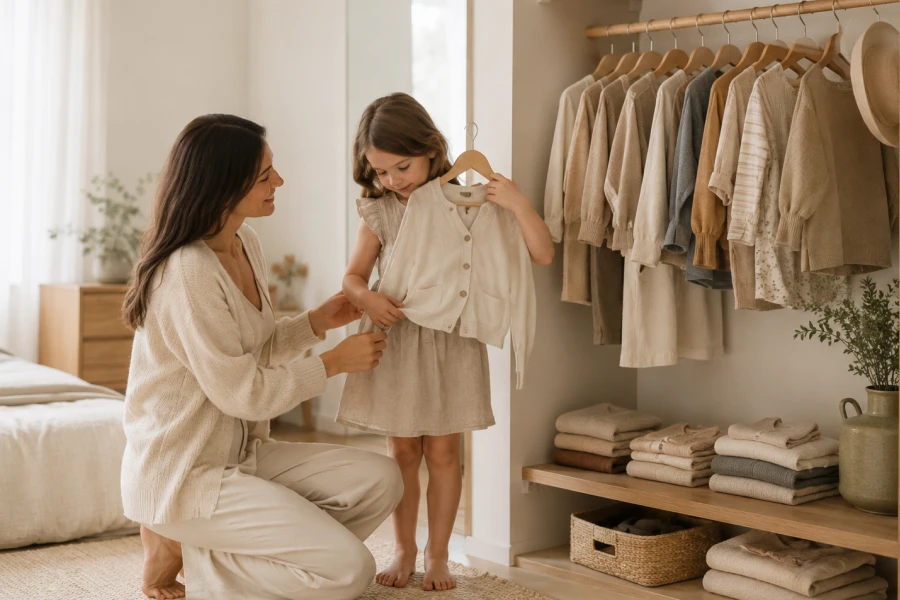
A kid capsule wardrobe can turn daily dressing from a negotiation into a rhythm. Parents often think children need more clothing to make mornings easier. Usually, they need fewer choices that actually work together. A smaller closet helps your child see options clearly. It also helps you notice what fits, washes well, and gets worn. The goal is not strict minimalism. The goal is clothing that supports real school days, messy play, weather changes, and growing bodies. When the closet feels simple, mornings feel lighter. Your child gains confidence through familiar combinations. You gain time because the decisions become obvious.
Practical planning starts with the week your family already lives. Some children need playground-ready outfits every day. Others need neat layers for school, activities, visits, and family weekends. A useful closet reflects those needs first. It should not copy an adult fashion formula. Think about laundry timing, climate, school rules, and your child’s comfort preferences. A helpful seasonal kids wardrobe makes those patterns easier to manage. You can build around favorite textures, repeat colors, and reliable layers. Children still get personality. Parents simply remove the daily clutter around it.
Start by pulling everything into one place. This step shows duplicates, gaps, stains, and forgotten pieces quickly. Keep the clothing your child reaches for without reminders. Set aside anything itchy, awkward, too tight, or difficult to match. A strong children clothing organization system depends on honesty. If something looks cute but never leaves the drawer, it is not useful. Create small piles for school, home, outings, sleep, and seasonal needs. This makes the closet easier to read. It also stops random purchases from filling invisible gaps. Real life should choose the structure.
Choice becomes stressful when every item asks for another decision. A simple closet reduces that pressure because most pieces cooperate. Tops match bottoms without special planning. Layers work over multiple outfits. Shoes support the same color story. Children can dress themselves with fewer mismatched surprises. Parents can say yes more often because the options already make sense. Add mix-and-match kids clothes that share two or three base shades. Then allow small accents through prints, socks, hair accessories, or favorite jackets. The result feels flexible, not restrictive.
Color is the quiet engine of an easy closet. Choose a few dependable neutrals first. Then add two or three child-friendly accent colors. This gives variety without creating chaos. Layers matter because children move between classrooms, cars, playgrounds, and stores. Soft jackets, cardigans, leggings, and breathable tees often work harder than statement pieces. Laundry rhythm matters just as much. You need enough clothing to avoid constant washing, but not so much that clean piles become overwhelming. A clear easy laundry rotation keeps the whole system realistic. The best closet respects your schedule.
The biggest mistake is making the closet too adult-looking. Children need movement, softness, durability, and joy. Another mistake is removing everything colorful. A calm system can still include dinosaurs, florals, bright sneakers, or sparkly details. Avoid buying complete sets before testing what your child actually wears. Growth spurts can change needs quickly. Weather can also expose missing layers. Do not build around fantasy occasions while ignoring ordinary Tuesdays. A thoughtful practical dressing routine should support repeat use. Keep space for one or two beloved wild cards. Those pieces keep the system personal.
Maintenance works best when it feels small. Review the closet every month or season. Remove what no longer fits. Replace only what the week clearly needs. Invite your child into simple choices. Ask which shirt feels best, which pants move well, and which outfit feels special. This creates ownership instead of resistance. Keep a short note on sizes, missing basics, and favorite colors. A steady morning outfit planning habit turns the closet into a family tool. Over time, dressing becomes calmer. The whole day starts with less friction.




Leave a comment