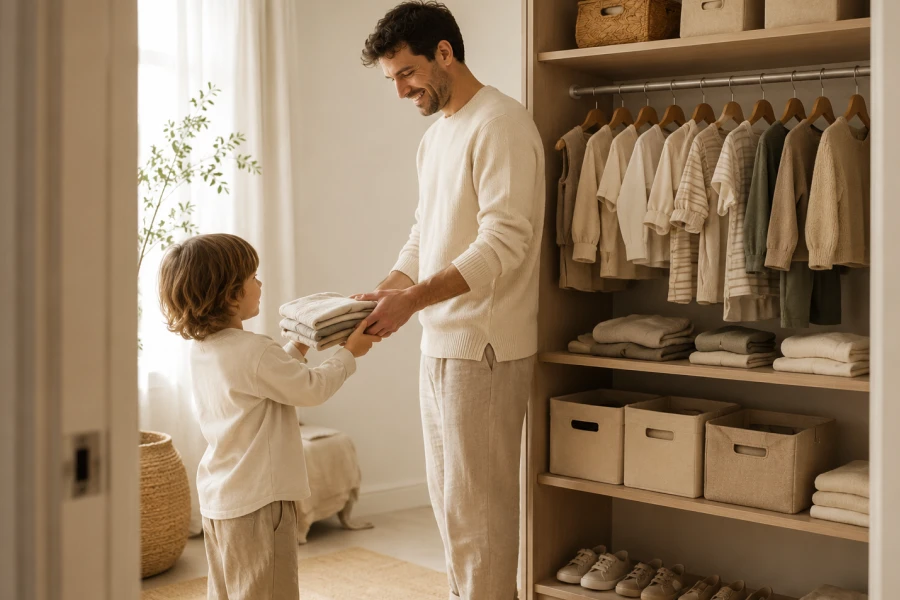
A child capsule closet succeeds when it reflects your child’s real days. It is not about creating a perfect display. It is about making dressing feel natural, quick, and comfortable. Children often resist outfits that ignore texture, movement, or mood. Parents often buy extras because the closet feels confusing. A smaller system solves both problems. It keeps reliable pieces visible. It also makes favorite outfits easier to repeat. When the closet becomes predictable, your child feels more independent. You spend less energy searching, matching, and negotiating. That small shift can change the whole morning.
Start with one drawer, one rail, or one season. A full overhaul can feel overwhelming. Small edits reveal what the closet truly needs. Choose clothing that fits now. Keep pieces that your child enjoys wearing. Remove items that create daily arguments. This simple edit creates an honest starting point. A helpful school day closet reset can happen in under an hour. You do not need a dramatic purge. You need a clearer view of what already works.
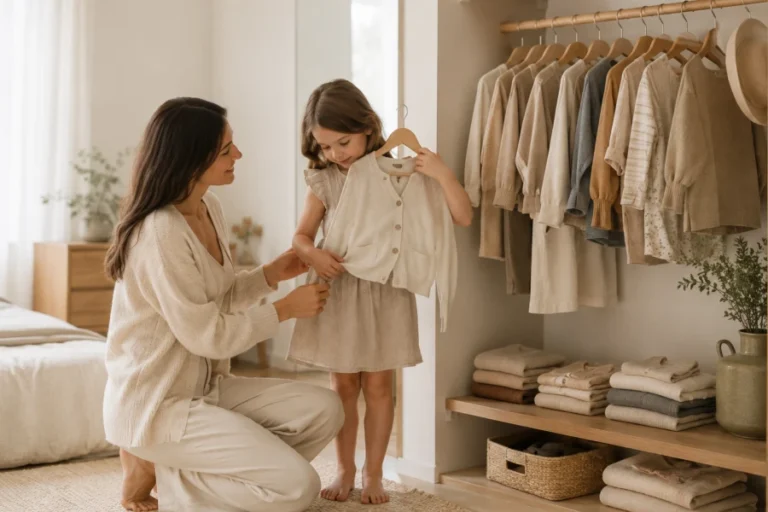
Children show preferences through repetition. They reach for the same leggings, hoodie, sneakers, or soft tee again. Pay attention before buying more. Comfort clues matter more than aesthetic plans. Some children love waistbands that stretch. Others want pockets, loose sleeves, or tag-free fabric. These details make dressing smoother. A strong family wardrobe planning habit listens before it organizes. You can still guide the color palette. However, the system lasts longer when your child recognizes themselves inside it.
Growth is the reason many children’s closets feel messy. Sizes shift quickly. Sleeves shorten without warning. Shoes suddenly pinch. A practical system keeps this normal instead of frustrating. Store the next size separately when possible. Label seasonal extras clearly. Review fit before school terms, holidays, and weather changes. A dependable capsule clothing for children approach makes those reviews easier. You can replace targeted gaps instead of buying randomly. That protects both your budget and your mornings.
Independence improves when outfits are easy to assemble. Place everyday tops where your child can reach them. Keep bottoms grouped by type. Use hooks for jackets, uniforms, or tomorrow’s outfit. Visual simplicity helps children participate. It also prevents the closet from becoming a parent-only system. Add a small basket for weather extras. Include hats, gloves, swimwear, or sun layers when the season demands them. A flexible minimalist kids style setup should still feel friendly. Children cooperate more when the process feels within reach.
A calm closet should not erase fun. Children often use clothing to express confidence, imagination, and belonging. Keep a few playful pieces that spark joy. Limit them only when they make matching impossible. Prints work best when they share colors with basics. Statement shoes feel easier when outfits stay simple. Accessories can carry personality without overcrowding drawers. This balance helps parents and children feel heard. It also prevents the system from becoming too serious. When personality has a planned place, the closet stays both useful and expressive.
The system should become easier after the first edit. If it needs constant attention, it is probably too complicated. Keep categories obvious. Use fewer storage tools. Avoid folding methods nobody can maintain. Repeat outfit formulas that already work. Replace worn basics before adding special items. Let your child help with small resets. Celebrate when they choose an outfit without stress. Over time, the closet teaches decision-making. The real success is not visual perfection. It is calmer dressing that fits your family’s pace.



Leave a comment